
Is Your Pelvic Floor the Missing Link to Your Personal Best?
When we think about improving running performance, we typically default things like VO2 max, carbon-plated shoes, and tweaking training plans. But recent research shows that there is an often overlooked player in how you perform on the run: The Pelvic Floor.
We’re moving away from the idea that pelvic health is only for postpartum runners (though it’s absolutely that too!). Instead, we’re looking at it as a foundational requirement for power, stability, and running economy*, for every athlete.
*Running economy is your body’s fuel efficiency when running, measured as how much energy (oxygen) your body consumes to maintain a specific speed. Better running economy means less energy is required to hold a given pace.
Here’s how the pelvic floor plays into your ability to run your best and a few strategies to ensure that it’s primed to help you thrive!
1. The Pelvic Floor as A Shock Absorber
Think of your pelvic floor as part of your body's high-end suspension system. Instead of being a passive sling, it’s dynamic, shock-absorbing and key to managing loads.
When your foot hits the pavement, your body has to manage a sudden, massive change in acceleration. A functional pelvic floor helps manage this internal pressure and impact. If that suspension system is dysfunctional, that energy doesn't all get directed to propelling you through your next stride. Instead, some of it "leaks" away.
Researchers have explored the high energy cost of those leaks. When the pelvic floor doesn't manage pressure efficiently, your body finds other strategies to manage loads, often recruiting bigger, "global" muscles (like your abs and hip flexors) to take on that shock-absorbing role of the pelvic floor. The problem is that’s not the job those bigger muscles were designed for. You end up using a ton more energy and fatiguing earlier.

The Bottom Line
When your pelvic floor doesn’t function as a dynamic shock absorber, you recruit extra muscles to help. This requires more oxygen and energy, making you a less efficient runner. By optimizing the pelvic floor, you stop wasting fuel and start using it for forward propulsion.
2. The Link to Hip & Low Back Pain
A key study published in JOSPT found that 95% of women with lumbopelvic pain also presented with some form of pelvic floor dysfunction (wild!). If you’ve been battling a nagging hip or low back that just won't resolve, the pelvic floor could very well be a significant contributor to that persistent pain pattern.
In other words, persistent hip and back pain are often pelvic health issues in disguise. Here’s why that link is so key:
Anchored to the low back: The pelvic floor attaches directly to your tailbone. If these muscles are overactive, they can pull on the sacrum, leading to referred pain in the lower back and SI joint.
The glutes as a back-up plan: When the pelvic floor doesn't provide internal stability, the brain "up-regulates" hip muscles (like the glutes) in its search for stability. This can contribute to that "perpetually tight" feeling in the hips that foam rolling can't fix.

The Bottom Line
Persistent hip and back pain is often a sign that your body is grasping for stability because the pelvic floor isn’t pulling its weight.
If you’ve been chasing a "tightness" that won't resolve, consider that the pelvic floor may be the hidden driver behind your hip or low back pain.
3. Stability vs. Stiffness
Human bodies are phenomenal at accomplishing a task, even when the ideal strategy isn’t available. So when we lack stability from the pelvic floor, we often grip, brace, or stiffen other components of the core to grasp whatever stability we can. But, while this feels like stability, it’s actually stiff movement.
This stiffness often starts with shallow chest breathing or breath-holding, which prevents the fluid rotation of the pelvis needed for an efficient gait and interferes with your ability to make use of the "free elastic energy" you get from your tendons.
The Achilles Advantage
The Achilles is the most powerful energy-storing tendon in the body, contributing up to 35% of the energy needed to propel you forward on each step. To take advantage of this "Achilles spring," you need the calf muscles hold firm, allowing the tendon to stretch like a high-tension rubber band.
In runners with pelvic floor dysfunction, we often see a less springy landing to avoid impact to the pelvic floor. This prevents the Achilles from functioning as a giant spring and forces the calf muscles (Soleus and Gastrocnemius) to work much harder to push you forward.
The Bottom Line
If you’re bracing for impact to avoid loading the pelvic floor, you lose much of the “free” energy stored in tendons. That translates to earlier fatigue, "heavy legs," and changes in mechanics that make you more vulnerable to injury.
How do you know if Pelvic Floor Dysfunction is holding you back?
It’s been well documented that greater than 50% competitive of female athletes experience at least one pelvic health symptom. You’re in good company!
It’s so common that a lot of great research has been done in recent years to help quickly screen and identify athletes who would benefit from a pelvic health assessment.
Ask yourself if you usually experience:
Any leaking when you run, jump, or cough.
A sudden, strong urge to go that’s hard to ignore.
A feeling of "fullness" or heaviness in the pelvic area.
Persistent pelvic, hip, back or lower abdominal discomfort.
Pain with intimacy
If any of those are a yes, even if only on occasion, it’s worth being assessed.
How We Can Help
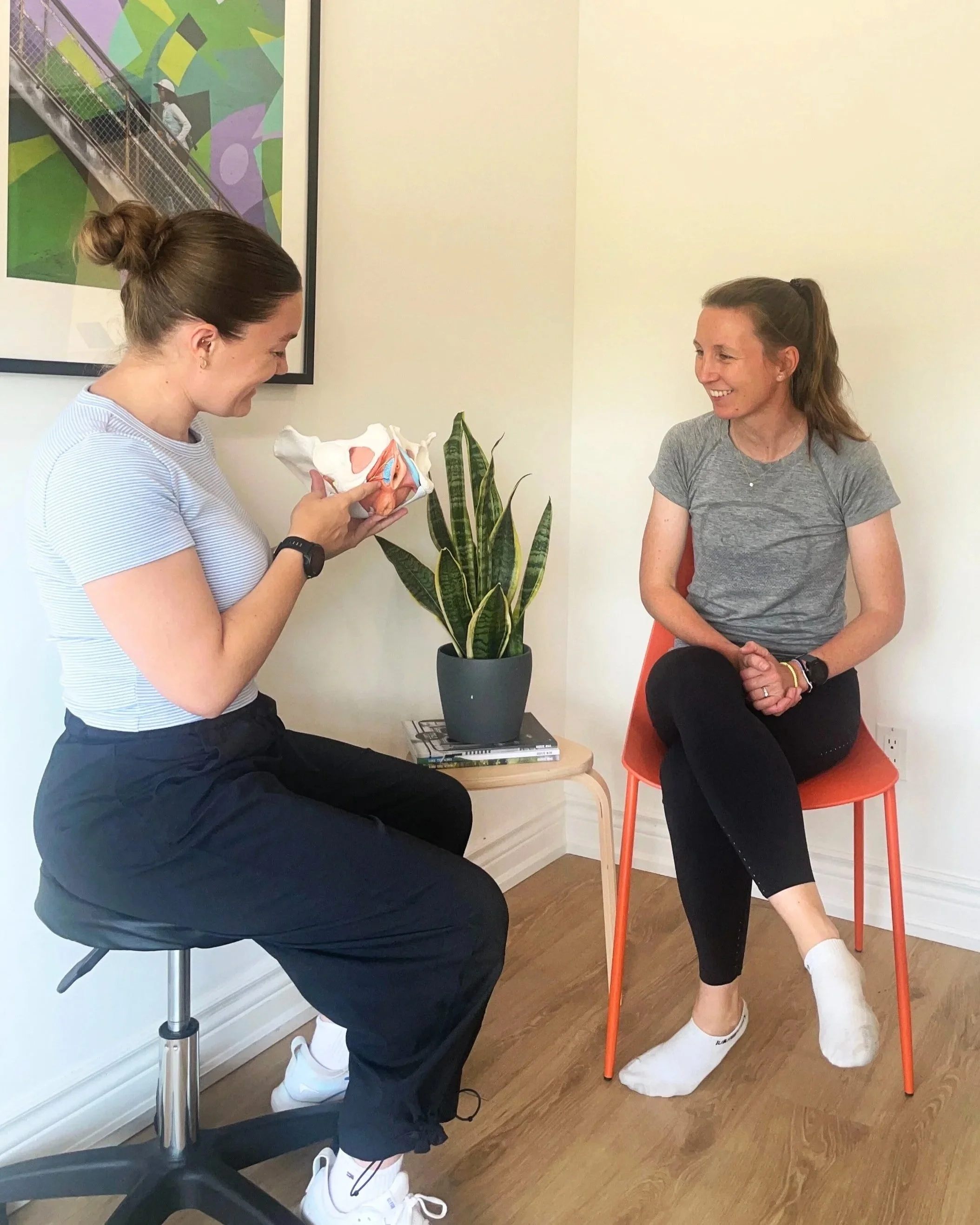
We specialize in integrating pelvic health with orthopedics, sport and performance. Whether you are chasing a marathon PB or just want to run without back pain, we treat your pelvic floor as theathletic muscle it is.
Ready to find your extra gear? Book a Runner’s Pelvic Health Screen with our team today and stop "bracing" so you can start "springing."