
You’ve done the miles (through a sweaty, humid summer with questionable air days on repeat!). Now it’s time to polish this thing off before you send it on race day. Taper time!
A well-executed taper has been shown to improve endurance performance by up to 3%, and for a marathon, that can mean minutes off your finish time.
To help you nail the difference between a good race and the race of your life, we've pulled together the research on what actually moves the needle in these final weeks.
Dial in these strategies, and you're not just resting up; you're setting yourself up to chase the race of your dreams.
1. Training loads: Decrease your volume, but don’t be afraid to push
The biggest taper mistake isn't tapering too much; it's letting go of all intensity.
A 2023 systematic review and meta-analysis looked across endurance athletes and found that the strongest performance gains happened with a taper of 10-21 days, with training volume progressively reduced by 41–60%.
Critically, the runners who benefited most didn't drop their intensity or frequency.
Instead, they kept running the same number of sessions per week and kept some faster work in the mix; they just ran less overall distance.

The runners who saw the greatest performance gains through the taper were those who maintained some intensity but decreased overall mileage.
Progressively cutting your mileage while preserving a few quality sessions, like shorter tempo efforts or strides, keeps your legs sharp and your neuromuscular system firing, while giving your body the recovery window it needs. Think "less volume, same spark," not "less of everything."
How to put this in practice to nail your marathon taper:
Reduce total weekly volume by roughly 40–60% over your final 2 to 3 weeks, rather than cutting it all at once
Keep the same number of runs per week, just make most of them shorter
Hold onto a few short bursts of race-pace or slightly faster effort (think strides or a short tempo segment) rather than cutting all intensity. For example, if you’d typically do 6 x 800m repeats, you could bring that number to 2 × 800m or 3-4 × 400m, but hold your same effort.
2. Use This Time to Review and Nail Your Nutrition Strategy
We know that you know that fuel is important. We know that you’re on the ball with levelling up your carb intake. BUT, in a 2025 study, only 5.3% of endurance athletes actually hit both their pre-race and during-race carbohydrate targets (2).
Read that again. 5.3%!
Perhaps more importantly, most athletes' actual carbohydrate intake during a race was significantly lower than what they had planned, and lower still than what they thought they'd consumed.
In other words, most runners are underfueling on race day while overestimating how much they’re consuming.
Furthermore, researchers found that even runners who had practiced fueling throughout training consumed significantly fewer carbohydrates on race day than during training.
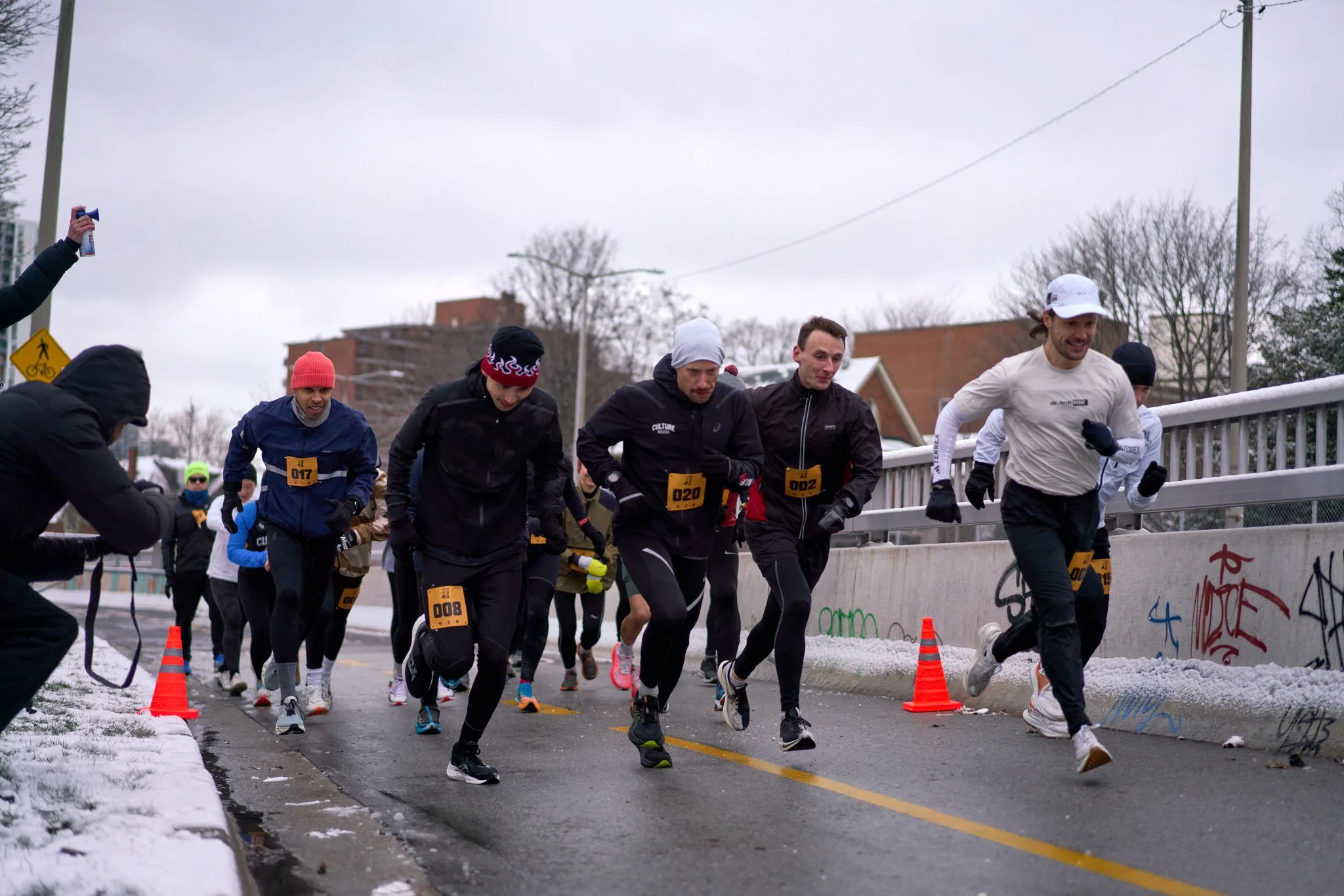
Most runners are underfueling on race day while overestimating how much they’re consuming.
So even if you’ve practiced fuelling well throughout training, you aren’t immune to underfuelling when it’s time to chase those marathon and half marathon dreams! Even if you think you’re right on point with your fuelling strategy, it’s still worth double-checking and reviewing your plan. The taper is the perfect time!
With a little less volume on the run, you’ve got a little more time and capacity to review the plan, double-check, pick up any additional fuel, and make that plan ingrained in your brain. Notice where you’ve gone wrong in the past. Anticipate where you might consider skipping a gel, and practice the conversation with yourself in that moment.
Your taper nutrition checklist:
Check what makes the most sense for you (sports-focused naturopathic doctors, Nutritionists and Dieticians are a wealth of information), but general guidelines suggest targeting roughly 10–12 g of carbohydrate per kg of bodyweight per day in the 24 hours before the race
General guidelines suggest aiming for 60–90 g of carbohydrate per hour once you're racing
If you haven’t already, test your full race-day fueling plan. Same brand, same timing, same amount.
Rehearse conversations with yourself if things aren’t sticking to plan on race day. Don’t let yourself fall into the trap of underfuelling! It’s easier to do than you think.
3. Prioritize Sleep and Recovery
If there's one pillar that quietly undermines every other strategy you’re implementing when it's neglected, it's sleep. Sleep deprivation substantially harms endurance performance (4).
You’ll feel worse. You’ll run slower. You’ll fatigue earlier.
Basically, sleep is your superpower and now is the time to really put it to use.
Research specific to marathoners found that poor sleep habits are associated with slower marathon finish times, likely through a combination of impaired recovery, elevated fatigue, and disrupted fueling behaviour (3).
Here's the encouraging part: you don't need to nail every single night perfectly, and you definitely shouldn't panic about the night before the race. It's completely normal.
In fact, 80% of athletes report poor sleep the night before competition, most often because of race-day nerves and excitement (6).
What matters far more is your sleep in the days and weeks leading up to race day.
Research on "sleep banking" shows that adding as little as 45 extra minutes of sleep a night over several nights before race day can measurably improve performance(5). So use the taper to actually go to bed earlier, protect a full 7+ hours nightly, and treat sleep with as much attention as you did your toughest training runs.
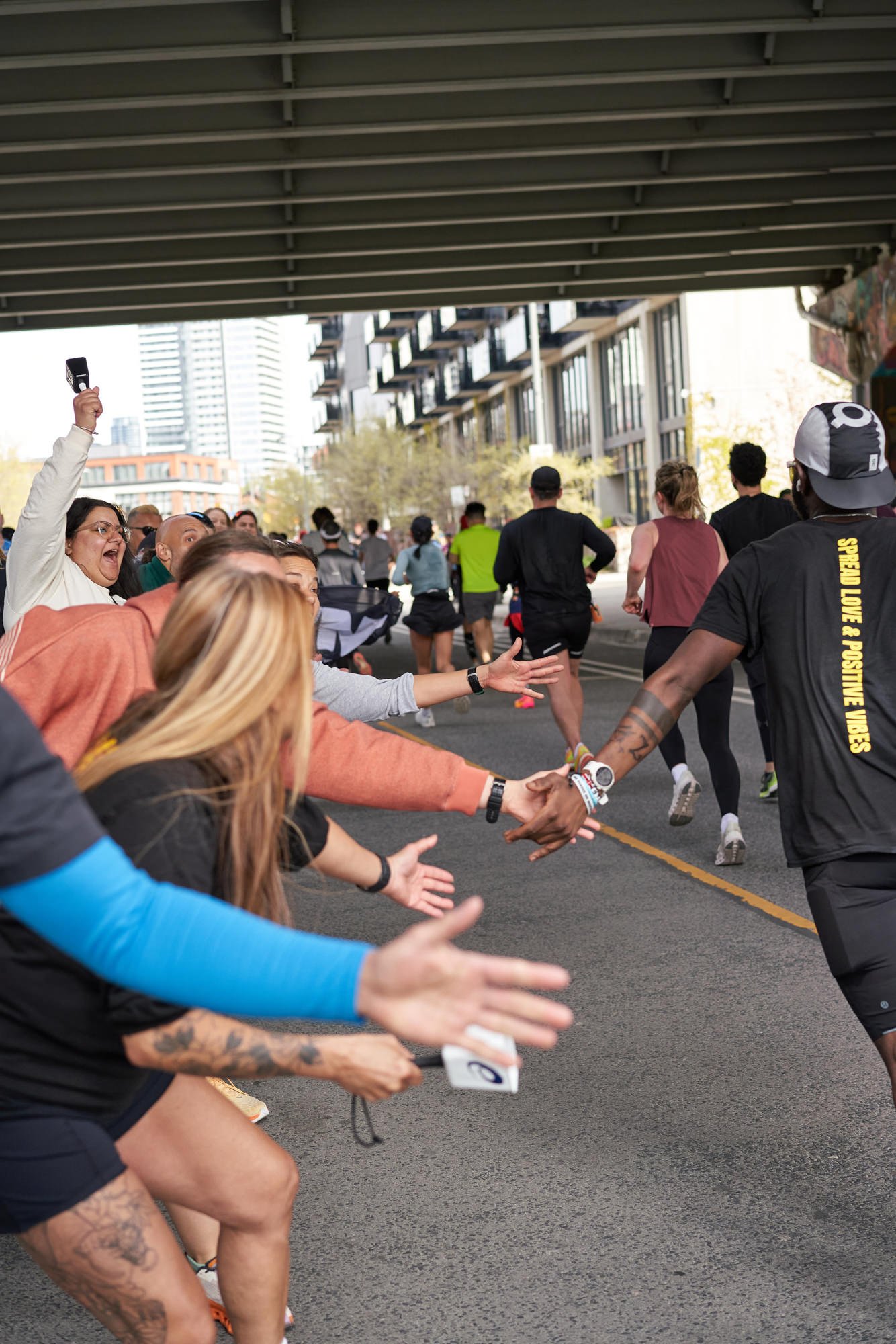
Adding as little as 45 extra minutes of sleep a night over several nights before race day can measurably improve performance.
Small habits that add up during taper:
Aim to add 45+ extra minutes of sleep per night in the two weeks before race day, rather than relying on one big night's rest right before
Protect a minimum of 7 hours nightly as your baseline, not your ceiling
Don't stress over one rough night close to race day. It's common, and your sleep from the rest of the week matters more
Fun fact linking back to nutrition: The same research suggesting that the vast majority of marathoners are underfuelling despite believing that they’re nailing it found that runners with better sleep habits and lower pre-race anxiety were significantly more likely to actually hit their fuelling targets.
4. Make a massive success a non-negotiable to your brain
At some point on marathon day, things will hurt.
It’s what you signed up for.
It’s part of the joy and heartbreak of putting your heart on the line, and it’s also what makes the accomplishment that much sweeter at the end.
So what’s the difference between the runners who persevere through that discomfort and those who unravel the moment it shows up??
The runners who handle that discomfort best aren't necessarily the fittest; they're often the ones who've rehearsed how they'll respond to it.
Research shows that motivational self-talk improves endurance performance by directly changing athletes' perception of effort, making hard efforts feel more manageable in real time (7).
In other words, when that pain starts to settle in, you can control how much it will affect you simply by changing the language you use with yourself in that moment.
Responding positively is a skill, and skills need practice.
Whether you’ve already been practicing the narratives that you want to use with yourself on race day, or it’s a new focus altogether, the taper is a great time to practice.
Choose a short phrase or mantra. Something simple you can repeat when those quads get extra sassy at kilometre 35. Now start using it on repeat, both in running and daily life.
Put it on a sticky note on your mirror.
Set it as a phone reminder.
Visualize the exact moment in the race you'll need it most.
By race day, it shouldn't feel like a new trick; it should feel like a default response you've already rehearsed a hundred times.
Ways to build this now:
Pick one short, specific mantra rather than a vague idea like "stay positive"
Rehearse it as much as you can. Put it everywhere. Run it through your mind 100 times before lunch.
Visualize the specific point in the race where you'll likely need it (a hill, a late mile, a rough patch), and practice what it feels like to put it to use.
A Quick Note on Taper Niggles
If a weird ache, tight calf, or new twinge shows up during your taper, take a breath. This is extremely common, and it doesn't mean your training is falling apart.
As your volume drops, your body often becomes more aware of small aches that were previously masked by the sheer volume of running you were doing, and it's completely normal for something to "pop up" that you never noticed during peak training weeks.
If something feels off, here's how to handle it:
Book a visit with your physio, chiro, or RMT now. Taper week is an ideal time for a tune-up. You want to stand on that start line, chest high, knowing that you’re moving your best
Stick to what you know. Trust that you are strong, resilient and ready to rip!
Distinguish a dull, general niggle (usually fine, often taper-related) from a sharp or one-sided pain that changes your gait (worth a professional opinion sooner rather than later)
Remember that some heightened body-awareness during taper is normal, not a sign your race is in jeopardy
Bringing It All Together
None of these four pillars work in isolation. They reinforce each other.
Better sleep supports better fueling decisions.
Smart volume reduction gives your body the resources to actually absorb that sleep and nutrition.
And a well-rehearsed mental game is what lets you execute the plan when things get hard late in the race.
The runners who taper best aren't doing less work in these final weeks. Instead, they're doing different work, and doing it deliberately.
So as you head into your taper, resist the urge to see it as time off. See it as your final, most important training block. The gains are less visible on Strava, but trust us, they’re every bit as real on race day.
We exist to help you reach your goals with confidence!
If you’re looking for running physiotherapy, chiropractic, or coaching services and are located in Toronto or Hamilton, we’d love to chat all things running with you.
Whether you’re overcoming an injury, keen to dial in performance or simply want to run joyfully for as long as possible, we’ve got you!
We specialize in the latest best practices for treating running injuries across our clinic locations in Hamilton, Downtown Toronto, and Midtown Toronto.
Book now in:
Next on your reading list:
The Complete Marathon Recovery Guide: What Really Happens to Your Body After 42.2 km.
5 Evidence-Based Ways to Run a Faster Marathon (Without Relying on Super Shoes)
References
Wang, Z., Wang, Y. T., Gao, W., & Zhong, Y. (2023). Effects of tapering on performance in endurance athletes: A systematic review and meta-analysis. PLOS ONE, 18(5), e0282838.https://doi.org/10.1371/journal.pone.0282838
Lanpir, A. D., Eroğlu, M. N., Özyıldırım, M., & Louis, J. (2025). Under consumed and overestimated: Discrepancies in race-day carbohydrate intake among endurance athletes. European Journal of Sport Science, 25(11), e70055.https://doi.org/10.1002/ejsc.70055
Cook, J. D., Gratton, M. K. P., Bender, A. M., & Werthner, P. (2023). Sleep health, individual characteristics, lifestyle factors, and marathon completion time in marathon runners: A retrospective investigation of the 2016 London Marathon. Brain Sciences, 13(9), 1346.https://doi.org/10.3390/brainsci13091346
Lopes, T. R., Pereira, H. M., Bittencourt, L. R. A., & Silva, B. M. (2023). How much does sleep deprivation impair endurance performance? A systematic review and meta-analysis. European Journal of Sport Science, 23(7), 1279–1292.https://doi.org/10.1080/17461391.2022.2155583
Roberts, S. S. H., Teo, W-P., Aisbett, B., & Warmington, S. A. (2019). Extended sleep maintains endurance performance better than normal or restricted sleep. Medicine & Science in Sports & Exercise, 51(12), 2516–2523.https://doi.org/10.1249/MSS.0000000000002071
Erlacher, D., Ehrlenspiel, F., Adegbesan, O. A., & El-Din, H. G. (2011). Sleep habits in German athletes before important competitions or games. Journal of Sports Sciences, 29(8), 859–866.https://doi.org/10.1080/02640414.2011.565782
Blanchfield, A., Hardy, J., de Morree, H., Staiano, W., & Marcora, S. (2014). Talking yourself out of exhaustion: The effects of self-talk on endurance performance. Medicine & Science in Sports & Exercise, 46(5), 998–1007.https://doi.org/10.1249/MSS.0000000000000184